Dental Crowns Los Angeles CA: Pros and Cons You Should Know

A dental crown can solve a problem that looks simple from the outside and turns out to be more complicated once you sit in the chair. A tooth cracks. An old filling fails. A root canal leaves a back molar brittle. You want the tooth to feel normal again, look right when you smile, and last long enough that you are not back in the same position next year. That is where crowns come in, and why so many patients searching for Dental Crowns Los Angeles CA are trying to understand whether the treatment is truly worth it.
The short answer is that crowns are often an excellent restorative option, but they are not a casual decision. A crown changes the tooth permanently. It can protect and strengthen, but it also involves reshaping natural enamel. The best choice depends on what is happening with the tooth, how much structure remains, where the tooth sits in the mouth, how you bite, whether you clench at night, and frankly, what your budget can handle in Los Angeles.
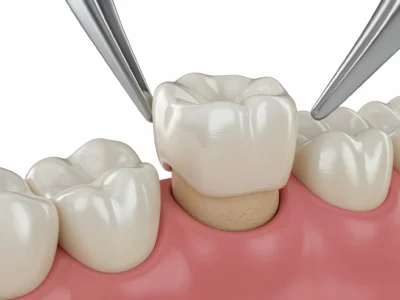
If you have heard crowns described as a “cap,” that is accurate, but a little too simple. A crown covers the visible part of a tooth and is custom made to restore shape, strength, and function. In day-to-day practice, crowns are used for teeth that are too damaged for a filling to predictably hold up, especially when stress from chewing would likely cause the tooth to fracture further.
Why crowns come up so often in real dental treatment
Most people do not wake up hoping to get a crown. Crowns usually enter the conversation after a tooth has already gone through a lot. A large cavity may have weakened the tooth walls. A years-old silver filling may have expanded and created cracks. A front tooth may have been chipped in an accident. A root canal may have removed infected tissue but left the tooth more prone to breakage.
In those cases, the crown is less about cosmetic improvement, though it can absolutely improve appearance, and more about preserving the tooth. Dentists often weigh one central question: can this tooth withstand everyday use with a more conservative restoration, or does it need full coverage to stay intact?
That distinction matters. A small filling is easier, cheaper, and more conservative. But if the remaining tooth is thin and fragile, choosing the “smaller” treatment can lead to a larger failure later. It is not unusual to see someone try to save money with another large filling, only to return after biting into crusty bread or a hard almond with a fractured cusp that now requires a crown, or in worse cases, extraction.
What a crown actually does
A properly designed crown wraps the prepared tooth and redistributes biting forces. That is especially important on molars, where chewing pressure is high. It also seals and supports teeth that have already lost substantial structure. On front teeth, crowns can restore contour, close visual defects, and improve color when other options are not enough.
The everyday benefit is simple: you can chew with more confidence, clean around the tooth normally, and stop worrying that each bite might be the one that breaks it. Patients often describe a sense of relief once a compromised tooth is crowned. Before treatment, they chew on one side, avoid certain foods, and live with low-level anxiety. After treatment, the mouth feels more balanced.
Of course, that best-case outcome depends on good planning, careful prep, a well-made restoration, and realistic expectations.
The strongest advantages of dental crowns
Crowns are popular because they solve problems that fillings and bonding sometimes cannot. Their strengths are practical, not theoretical.
First, they can dramatically improve the survival chances of a damaged tooth. If a tooth has lost a large amount of structure, full coverage may be the difference between keeping it and losing it.
Second, they restore function in a way patients notice right away. Chewing on a cracked or heavily restored tooth often feels tentative. A well-fitted crown can return stability and normal biting comfort.
Third, modern crowns can look very natural. All-ceramic and porcelain-based materials have come a long way. On front teeth, shade, translucency, and contour can be customized in detail. In a city like Los Angeles, where many patients care deeply about aesthetics, this matters.
Fourth, crowns often pair well with other necessary treatments. A root canal, for example, may eliminate infection and pain, but the tooth still needs structural support. A crown completes the restoration.
Fifth, when done well and maintained properly, crowns can last many years. There is no universal lifespan because habits and materials vary, but it is common to see well-made crowns serve patients for a decade or more. Some fail much earlier. Some last much longer. The range depends heavily on bite forces, hygiene, material choice, and the underlying tooth.
The drawbacks patients should understand before saying yes
The biggest downside is that crowns are irreversible. To place one, the dentist has to reshape the tooth so the crown can fit over it. That means removing enamel and, in many cases, some dentin. Once that tooth is prepared, it will always need a crown or another full-coverage restoration.
That is not necessarily a reason to avoid treatment. It is simply the reality. If a tooth truly needs a crown, preserving it is often the smarter move. But if a more conservative option would work just as well, it is worth discussing.
Cost is another real consideration, especially in Los Angeles. Fees vary by office, material, complexity, and whether specialists are involved. A straightforward crown costs less than a case that also needs buildup, root canal therapy, gum contouring, or replacement of an old failing crown with decay underneath. Insurance may help, but plans differ widely and often have annual maximums that patients exhaust quickly.
There is also the risk of sensitivity, bite adjustment, or fit issues. Most crowns settle in without drama, but not every case is seamless. A tooth may feel cold-sensitive for a while after preparation. The bite may need fine-tuning. Temporary crowns can come off. Occasionally, a crown feels “high” even if it looks perfect on paper, and a small adjustment makes all the difference.
A crown also does not make the tooth indestructible. Patients sometimes assume a crowned tooth is now stronger than nature. It is not. The restoration can chip, cement can fail, decay can develop at the margin, and the root can still fracture. If someone clenches hard, chews ice, or uses teeth as tools, a crown will not cancel out those habits.
Materials matter more than many patients realize
When people ask about crowns, they often imagine a single product. In reality, the material simpledentalca.com Dental Crowns Los Angeles CA selected can influence appearance, durability, thickness, and cost.
Porcelain or ceramic crowns are often chosen for visible teeth because they can mimic enamel beautifully. Zirconia has become common because it offers high strength and, depending on the type, improved esthetics compared with older versions. Porcelain fused to metal crowns are still used in some cases, though many patients prefer metal-free options for cosmetic reasons. Gold and other metal crowns remain excellent from a functional standpoint, particularly in back teeth, because they can be durable and conservative in terms of tooth reduction, but many patients do not want a metallic look.
There is no universally “best” crown material. For a front tooth, matching neighboring teeth may outweigh maximum fracture resistance. For a heavy grinder with a cracked lower molar, strength and wear behavior may lead the conversation. A dentist who jumps straight to one stock answer without discussing your bite, tooth location, and cosmetic priorities is not giving the issue enough thought.
The Los Angeles factor
Choosing Dental Crowns Los Angeles CA involves a local layer that patients from other markets may not encounter as strongly. Los Angeles is a broad, competitive dental landscape. You can find boutique cosmetic practices in Beverly Hills, family offices in the Valley, high-volume clinics, prosthodontic specialists, and insurance-driven offices all within a relatively short distance.
That variety can be helpful, but it also means experiences differ widely. Two offices may both advertise crowns, while one emphasizes high-end cosmetic artistry and the other prioritizes efficient restorative care. Neither is automatically wrong. The question is whether the office is a fit for your case.
In Los Angeles, aesthetics tend to carry more weight than in many other regions. Patients often care not just that a crown functions well, but that it disappears into the smile. That is especially true for front teeth and upper premolars. Detailed shade matching, photography, and communication with the lab can matter more than people expect. A technically solid crown that is slightly too opaque or flat in color can still disappoint a patient who notices every detail in photos and social settings.
At the same time, a sleek office and polished marketing do not guarantee better clinical judgment. Some of the best restorative work happens in practices that are not flashy at all. What matters is the diagnosis, the prep design, the quality of impressions or digital scans, the provisional phase when needed, and how carefully the final bite and margins are checked.
Situations where a crown makes very good sense
There are cases where a crown is not just reasonable, but clearly the safest route. A tooth with a large crack and a big existing filling is a classic example. So is a molar after root canal treatment, especially when much of the tooth has already been lost. A badly worn tooth may need a crown to restore shape and function. A broken cusp on a back tooth often points in the same direction if too much structure is missing for an onlay or filling to survive.
A crown may also be the right choice when appearance and structure both need help. A front tooth that is heavily restored, discolored, and fractured can often be rebuilt beautifully with a crown when veneers or bonding would not provide enough support.
There are also cases involving dental implants or bridges, where a crown serves as the visible replacement tooth. In those situations, the crown is part of a larger treatment plan rather than a standalone fix.
Situations where you should slow down and ask more questions
Not every damaged tooth needs full coverage. Sometimes a dentist recommends a crown because it is durable and predictable, but a more conservative option may still be clinically sound. Inlays, onlays, bonding, or a carefully designed filling may be enough in select cases.
You should ask for a clearer explanation if the tooth is relatively intact, has no crack symptoms, and the recommendation seems based solely on replacing a modest filling. There are times when the crown is still appropriate, but you deserve to understand why. A good dentist can show you photos, explain where the weak walls are, and describe what they expect to fail if the tooth is not covered.
Second opinions can be helpful when the proposed treatment feels aggressive, expensive, or poorly explained. That does not mean every recommendation is suspect. It simply means irreversible dentistry deserves confidence.
What the process usually feels like
For a traditional crown, the first visit often involves numbing the tooth, removing decay or old restorative material, reshaping the tooth, and taking a scan or impression. If the tooth is badly broken down, a buildup may be needed to create a solid foundation. A temporary crown is usually placed while the final one is fabricated.
The temporary phase tells you more than many patients realize. If the tooth calms down, the shape feels right, and you can function comfortably, that is a good sign. If the temporary is constantly coming off, feels rough, or the tooth becomes increasingly irritated, the dentist may need to reassess before final cementation.
At the delivery visit, the final crown is tried in, checked for fit, contact with neighboring teeth, shade, and bite. If all looks good, it is cemented or bonded depending on the material and case. A careful bite adjustment matters. Even a beautifully made crown can feel miserable if it hits too hard in one spot.
Same-day crowns are available in some offices using in-house milling systems. They can be convenient, and in straightforward cases they work well. But convenience is not automatically better. Complex esthetic cases or tricky bites may still benefit from a skilled laboratory technician and a more customized workflow.
The pros and cons in plain terms
Here is the most practical way to think about it:
- Crowns can save a weakened tooth that might otherwise crack beyond repair.
- They restore chewing strength and often improve comfort quickly.
- They can look extremely natural, especially with thoughtful material selection.
- They require permanent reshaping of the tooth.
- They can be expensive, and they still need maintenance like any other dental work.
That trade-off is the heart of the decision. A crown is often the better long-term choice for the right tooth, but “right tooth” is doing a lot of work in that sentence.
Longevity, maintenance, and the habits that shorten lifespan
A crown does not fail only because it gets old. In practice, failures usually happen for identifiable reasons. Recurrent decay at the margin is common when oral hygiene slips or diet is heavy in frequent sugar exposure. Fracture can happen from grinding, clenching, or chewing trauma. Cement washout or open margins may develop over time. Sometimes the underlying tooth has a problem that was not fully visible at the start, such as a deep crack extending below the gumline.
Patients who get the most life from crowns tend to do a few things consistently. They brush well at the gumline, floss or clean interproximally every day, attend recall visits, and wear a night guard if they grind. That last point is a big one in Los Angeles, where stress-related clenching is common. Many patients do not realize they grind until they start chipping porcelain, breaking temporaries, or waking with jaw soreness.
If a dentist recommends a night guard after placing a crown, it is not an upsell by default. In many heavy-bite cases, it is cheap insurance.
Cost versus value, which are not the same thing
People understandably focus on price first. A crown can feel expensive, especially if more than one tooth is involved. But the better question is value over time.
A less expensive restoration that fails in two years, damages the tooth further, and leads to endodontic treatment or extraction is not actually cheaper. On the other hand, paying premium cosmetic fees for a back molar crown when appearance is not a real concern may not add much value either.
The most useful financial conversation includes more than the fee. It should cover the condition of the tooth, alternative treatments, likely lifespan, whether additional procedures may be needed, and how the office handles adjustments Dental Crowns Los Angeles CA or remakes if something feels off.
Questions worth asking before moving forward
Patients make better decisions when they ask direct, practical questions. If you are comparing options for Dental Crowns Los Angeles CA, these are useful points to cover with the treating dentist:
- Why does this tooth need a crown instead of a filling, onlay, or other restoration?
- What material do you recommend for this specific tooth, and why?
- Is there a crack, and if so, how deep does it appear to be?
- Will I need a buildup, root canal, or night guard as part of the plan?
- What should I expect in terms of longevity, appearance, and follow-up adjustments?
A clear, grounded answer tells you a lot about the office. Good dentists usually enjoy these questions because they show the patient is engaged and realistic.
Cosmetic expectations deserve an honest conversation
Front tooth crowns can be transformative, but they are also where disappointment happens most easily. Natural teeth are not one flat color. They reflect light differently from ceramics, especially under changing lighting conditions. If one front tooth is being crowned and the adjacent natural tooth has unique translucency, craze lines, or a warm undertone, perfect matching can be challenging even in skilled hands.
That does not mean the result cannot be excellent. It means patients should talk about what “excellent” means to them. Is the priority blending with neighboring teeth, creating a brighter smile, masking discoloration from past trauma, or reshaping a tooth that has always looked off? Those are different goals and may call for different strategies.
Sometimes a single crown looks great on its own but draws attention because the surrounding teeth are worn or mismatched. In those cases, the issue is not the crown quality but the broader smile context.
When a crown is probably not the end of the story
Some teeth that seem crown-ready are actually warning signs of a bigger problem. If a patient has generalized wear, multiple fractures, flattened edges, and jaw tension, the crown may restore one tooth while the underlying bite problem continues. If gum recession or untreated periodontal disease is present, placing a crown without addressing tissue health can compromise the result. If decay risk is high due to dry mouth, medication use, or frequent snacking, a new crown may soon face the same threats as the old restoration.
Good treatment planning looks past the single tooth. That is one reason rushed dentistry can be costly. A beautiful crown on a tooth in a failing system is still a vulnerable investment.
The practical bottom line
Dental crowns remain one of the most reliable tools in restorative dentistry because they solve a real structural problem. They can rescue compromised teeth, restore normal chewing, and produce attractive results that blend naturally when planned well. For many patients, especially those with cracked teeth, large failing fillings, or root canal treated molars, a crown is not an indulgence. It is the treatment that gives the tooth its best chance.
The downsides are just as real. Crowns are irreversible, technique-sensitive, and often costly. They can fail if the diagnosis is wrong, the bite is not managed, or home care is poor. A crown is not always the most conservative answer, and it should never be recommended by reflex.
If you are weighing Dental Crowns Los Angeles CA, focus less on marketing language and more on judgment. Ask why the crown is needed, what alternatives exist, what material fits your case, and how your bite and habits affect the outlook. The right crown, on the right tooth, for the right reason, can be one of the most satisfying procedures in dentistry. The wrong crown is simply an expensive way to postpone a problem.
Simple Dental Vermont
Address: 8914 S Vermont Ave, Los Angeles, CA 90044
Phone number: +13239493000
FAQ About Dental Crowns Los Angeles CA
How much do crowns cost per tooth?
In the United States, a single dental crown typically costs between $800 and $2,500 per tooth without insurance. The ultimate out-of-pocket price depends heavily on the crown material, the location of the tooth, and whether you have dental insurance coverage.
What is the downside of crowns on teeth?
The primary downside of a dental crown is that the procedure permanently removes natural tooth enamel to shape the tooth for the cap.
Why do dentists push for crowns?
Dentists recommend crowns because a large filling cannot provide enough strength when a tooth loses a major portion of its structure or faces heavy chewing pressure.